Meta VR Glasses and Steam Frame: two directions for XR and what they mean for business
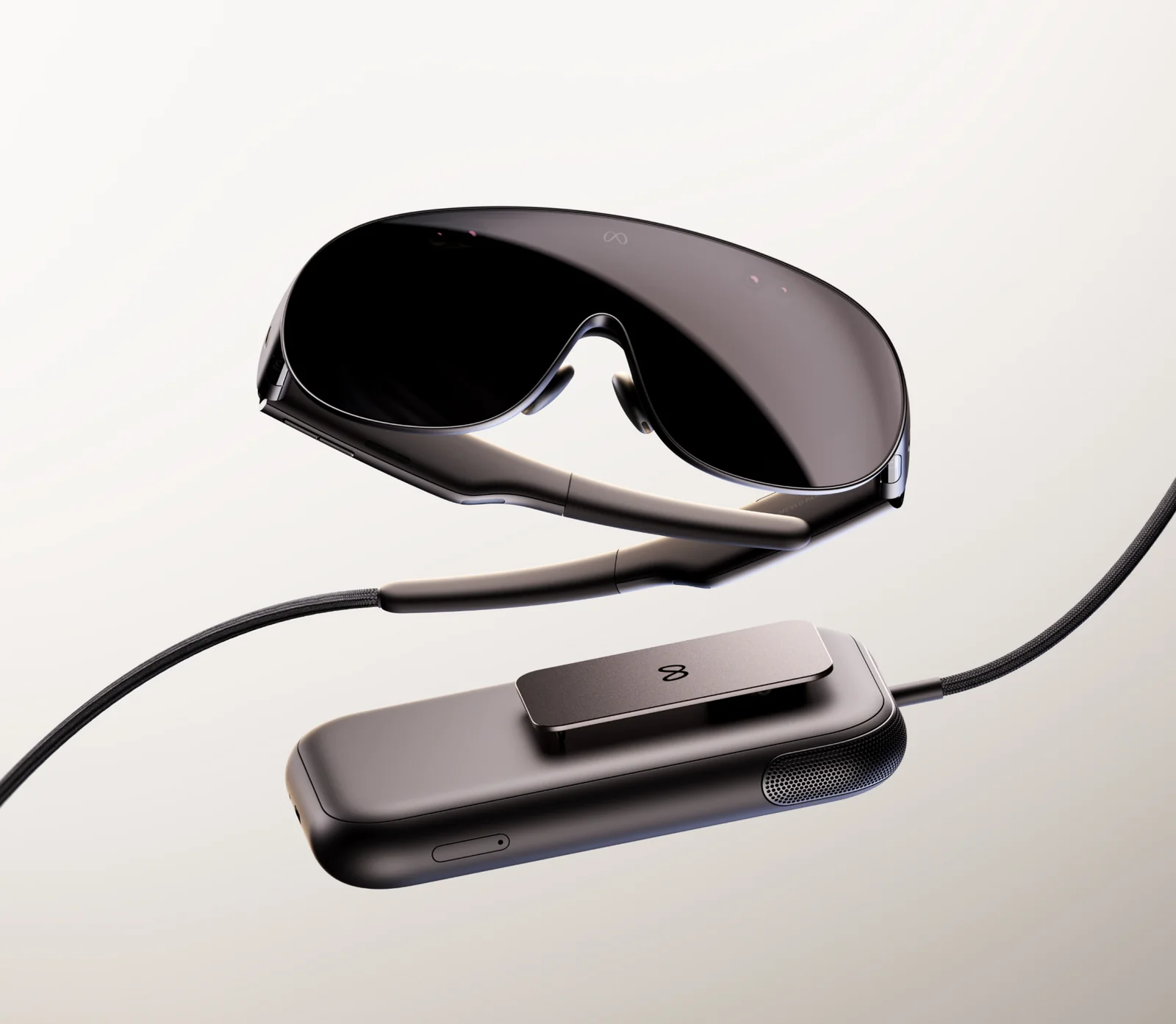
September 2026 brought two events that will shape XR hardware for the next few years: at Connect, Meta unveiled Meta VR Glasses, 100-gram VR glasses with an external compute puck, and Valve started selling Steam Frame, a standalone SteamOS headset built for PC streaming. On our blog we published a technical deep dive on both devices and what they mean for business deployments. Here are the key points.
In brief
- Meta VR Glasses: about 100 g on the face, a 300 g puck with Snapdragon Reality Elite, micro-OLED 2412×2288 per eye at 37 PPD, colour passthrough, hand and eye tracking. Price $1,299.99, launch in spring 2027, Poland on the launch list.
- Steam Frame: SteamOS 3 on ARM64, LCD 2160×2160 per eye, roughly 110° FOV, eye tracking and foveated streaming from a PC via the bundled Wi-Fi 6E adapter. $1,059 (256 GB) and $1,299 (1 TB), on sale since 14 September 2026.
- Two philosophies: Meta takes the weight off the face and keeps the experience inside Horizon OS; Valve treats the headset as an open Steam and PC terminal.
- For business: Meta VR Glasses for lightweight MR training, showrooms and multi-screen work; Steam Frame for PC-rendered simulations, event stations and SteamVR ports.
- Full article: Meta VR Glasses vs Steam Frame: which XR headset should you choose in 2026/2027?
Meta VR Glasses: the weight leaves the face
Meta VR Glasses carry no compute in the glasses themselves. The battery, storage and chipset live in a puck connected by a thin fiber-optic tether, which is why the visor weighs about 100 g. The micro-OLED displays deliver 37 pixels per degree, more than Quest 3 (about 25) and Apple Vision Pro (34). The price is a narrower field of view: 70° horizontal and 66° vertical. The device runs the entire Quest 3 library, and Meta promises more than 75 hand-controlled titles at launch.
Steam Frame: the PC as a rendering server
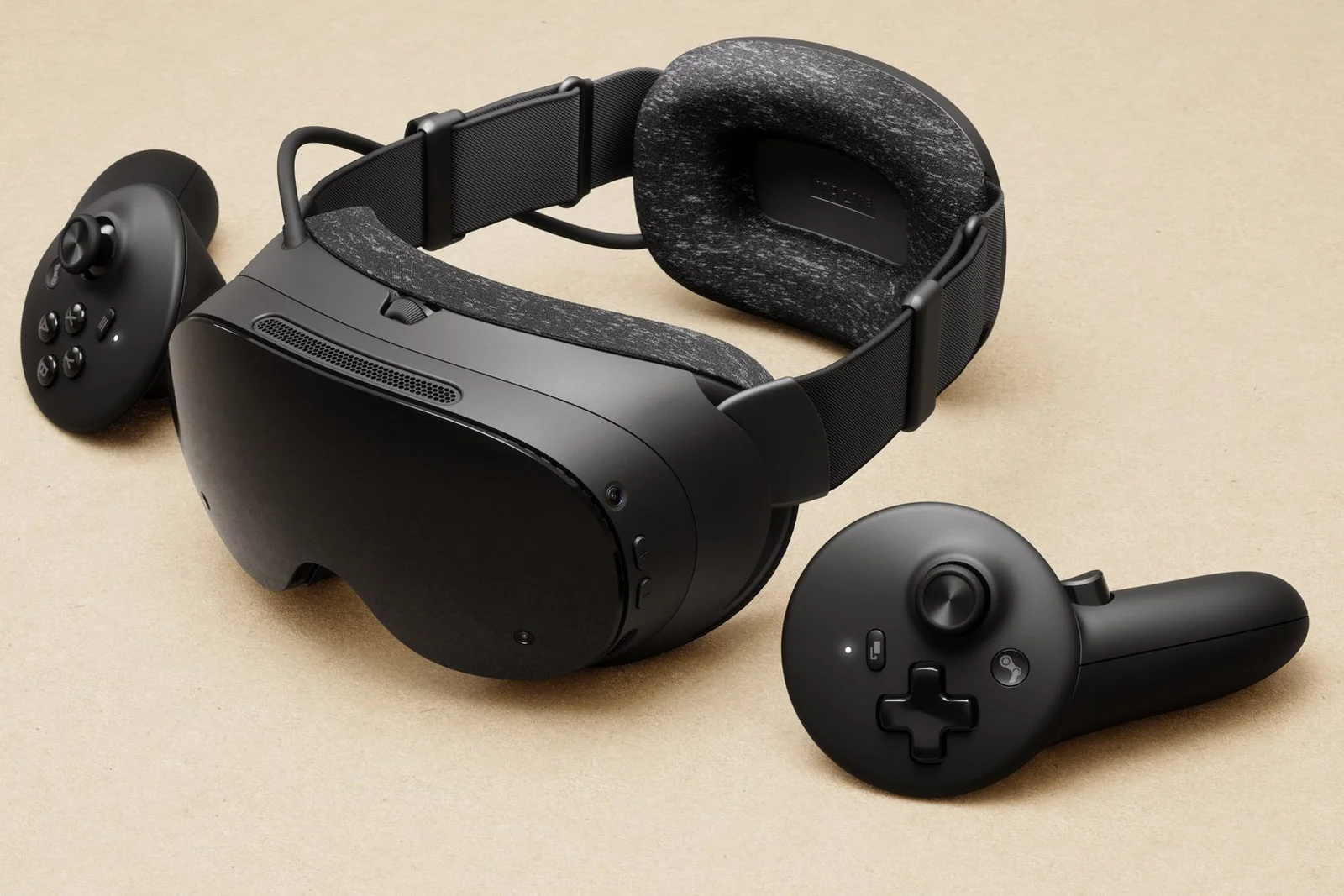
Steam Frame runs standalone on SteamOS, but its strongest feature is streaming from a computer. Eye tracking steers the stream’s bitrate so that most of the data goes where the user is looking (foveated streaming), and the bundled Wi-Fi 6E adapter creates a direct headset-to-PC link. x86 games run locally through Proton and FEX, Android apps through the Lepton layer. The headset has no hand tracking and no colour passthrough out of the box; colour comes from the $149 Arcturus Vision module.
What it means for business
From the perspective of Carbon Studio, which has shipped projects on 16 different headsets since 2015, the trade-offs matter more than the launches. Meta VR Glasses fit short MR training sessions, product configurators and text-heavy work, where comfort and hand-based control count. Steam Frame wins where the simulation renders on a powerful PC and the technical team needs an open system and three porting paths in Unreal Engine. The full comparison, spec table and decision framework are in the article on the Carbon Studio blog. If you are choosing hardware for an XR deployment, write to us: aleksander.caban@carbonstudio.pl.
Frequently asked questions
How much do Meta VR Glasses cost and when will they be available?
Meta VR Glasses cost $1,299.99 and are due to go on sale in spring 2027 in 24 countries, including Poland. The box contains the glasses, the compute puck, a 45 W power supply and a USB cable; Touch Plus controllers are sold separately. Local pricing in other currencies has not been announced yet.
How much does Steam Frame cost?
Steam Frame costs $1,059 for the 256 GB kit and $1,299 for the 1 TB kit (4,539 PLN and 5,549 PLN in Poland). Each kit includes Steam Frame Controllers, a Wi-Fi 6E adapter and Half-Life: Alyx. The power supply is not in the box and costs $29. Sales started on 14 September 2026 through a randomized reservation system.
Which device should a company choose for VR training?
Meta VR Glasses suit short MR training, controller-free interaction and non-technical users thanks to 100 g on the face, hand tracking and colour passthrough. Steam Frame works when the training is a simulation rendered from a powerful PC, but it requires maintaining the computer, the network and controllers. The detailed decision framework is in the blog article.
TL;DR
- Meta VR Glasses: 100 g on the face, 37 PPD, colour passthrough, $1,299.99, spring 2027.
- Steam Frame: SteamOS, roughly 110° FOV, foveated streaming from a PC, from $1,059, on sale since September 2026.
- Meta bets on lightweight MR in a closed ecosystem, Valve on an open Steam and PC terminal.
- Full technical analysis and business takeaways: Carbon Studio blog.